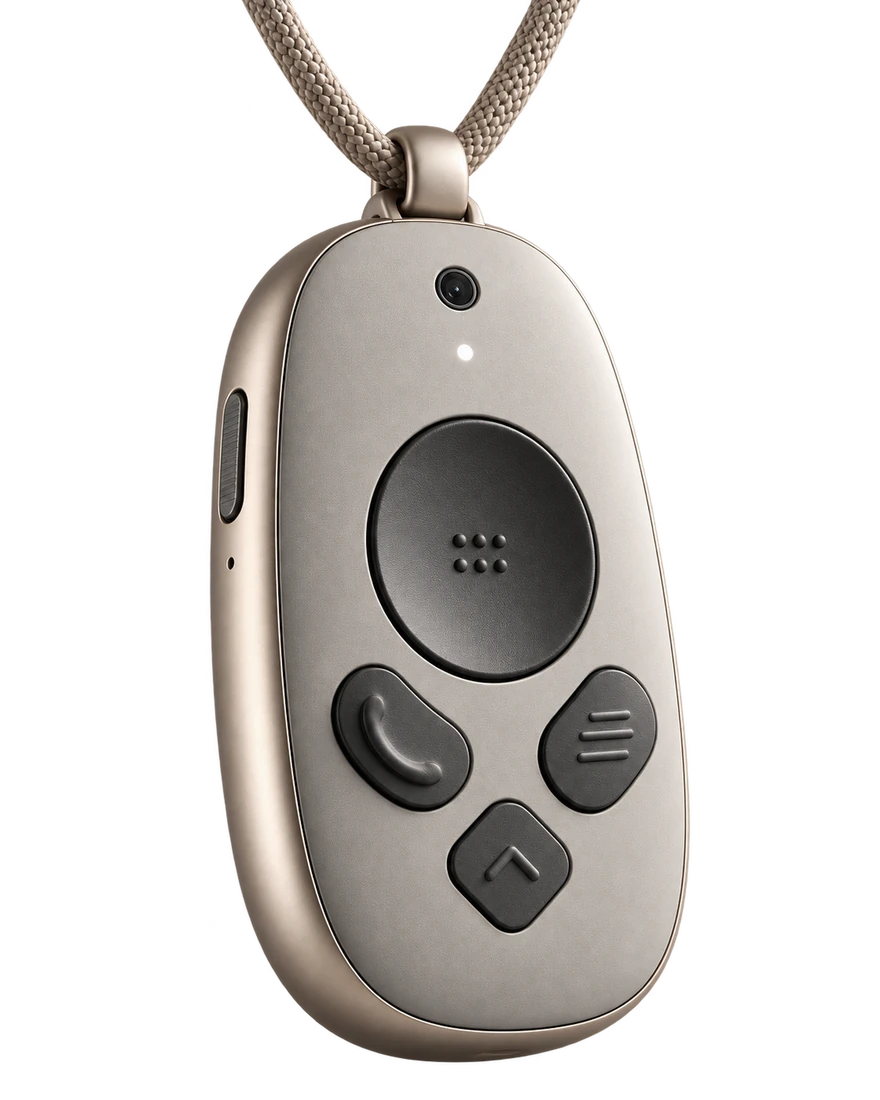
Feel first.
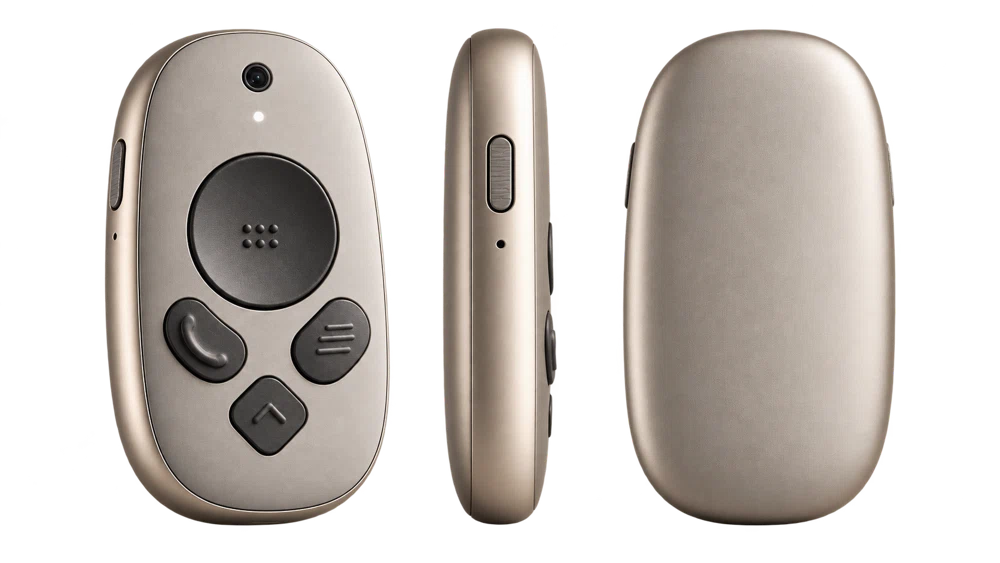
Distinct shapes and consistent positions you can recognize without looking.
INTRODUCING ONE / CONCEPT 001
An entirely different kind of everyday companion. Voice-first. Designed for touch. Made to help blind and low-vision people move through the world on their own terms.
THE IDEA
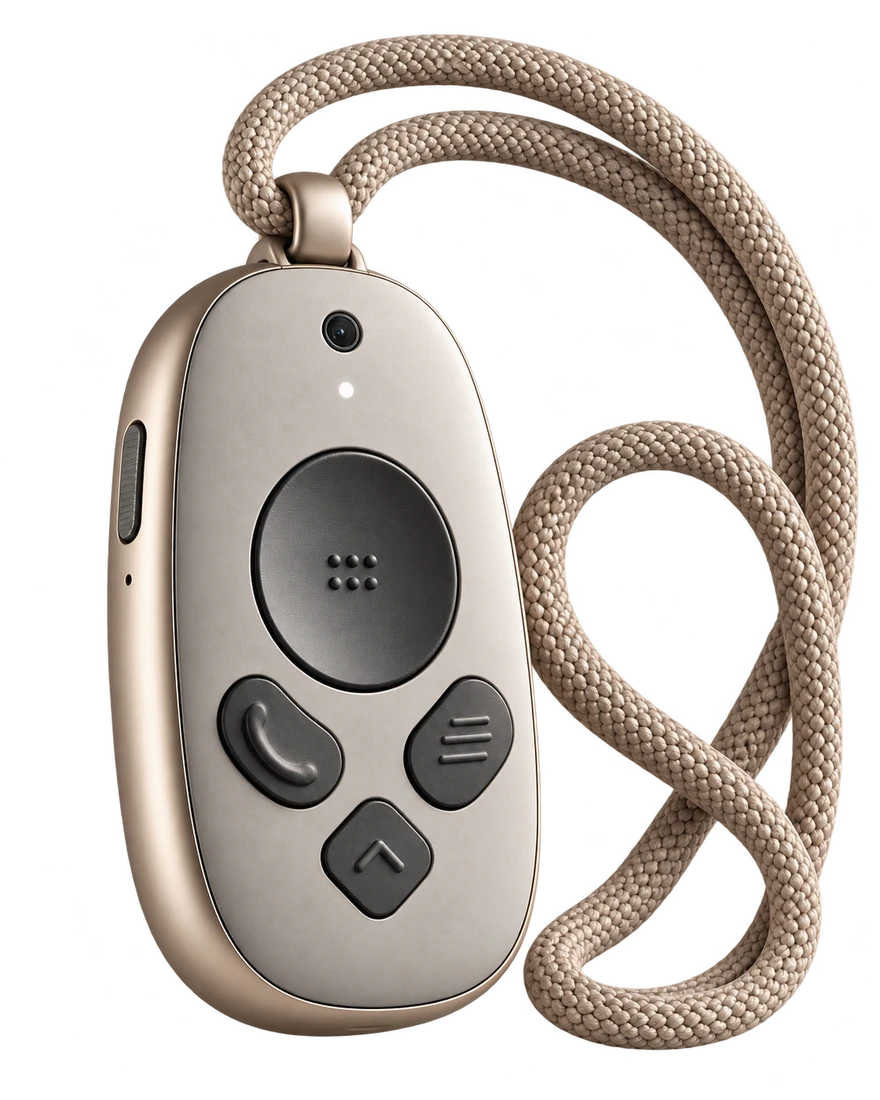
Most devices expect you to look. ONE begins with a different question: what if using technology felt as intuitive as reaching for something familiar?
Distinct shapes and consistent positions you can recognize without looking.
Ask, listen, and get on with your day. No complicated menu to memorize.
Intentional capture, tactile privacy controls, and clear audible feedback.
01 — DESIGNED TO BE FELT
A form that rests naturally in the hand. Four primary controls. Each one shaped and positioned so familiarity becomes second nature.
A large, shallow circular control with a six-dot tactile marker. Always the same place. Press and hold to speak.
Tactile shapes and markings are design proposals pending user testing; the six dots are not presented as a verified Braille transcription.
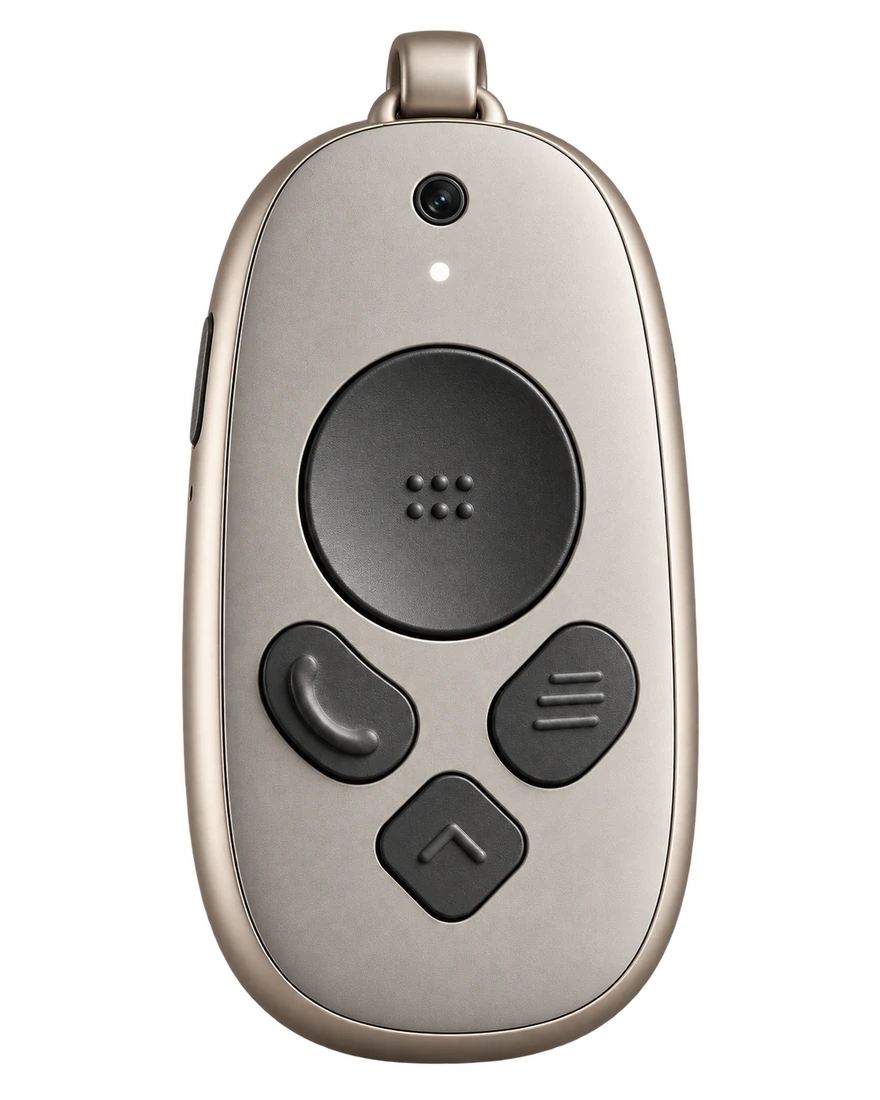
THE OBJECT, UP CLOSE
Nothing decorative. Nothing complicated. Just a small, carefully considered object to make the next interaction feel natural.
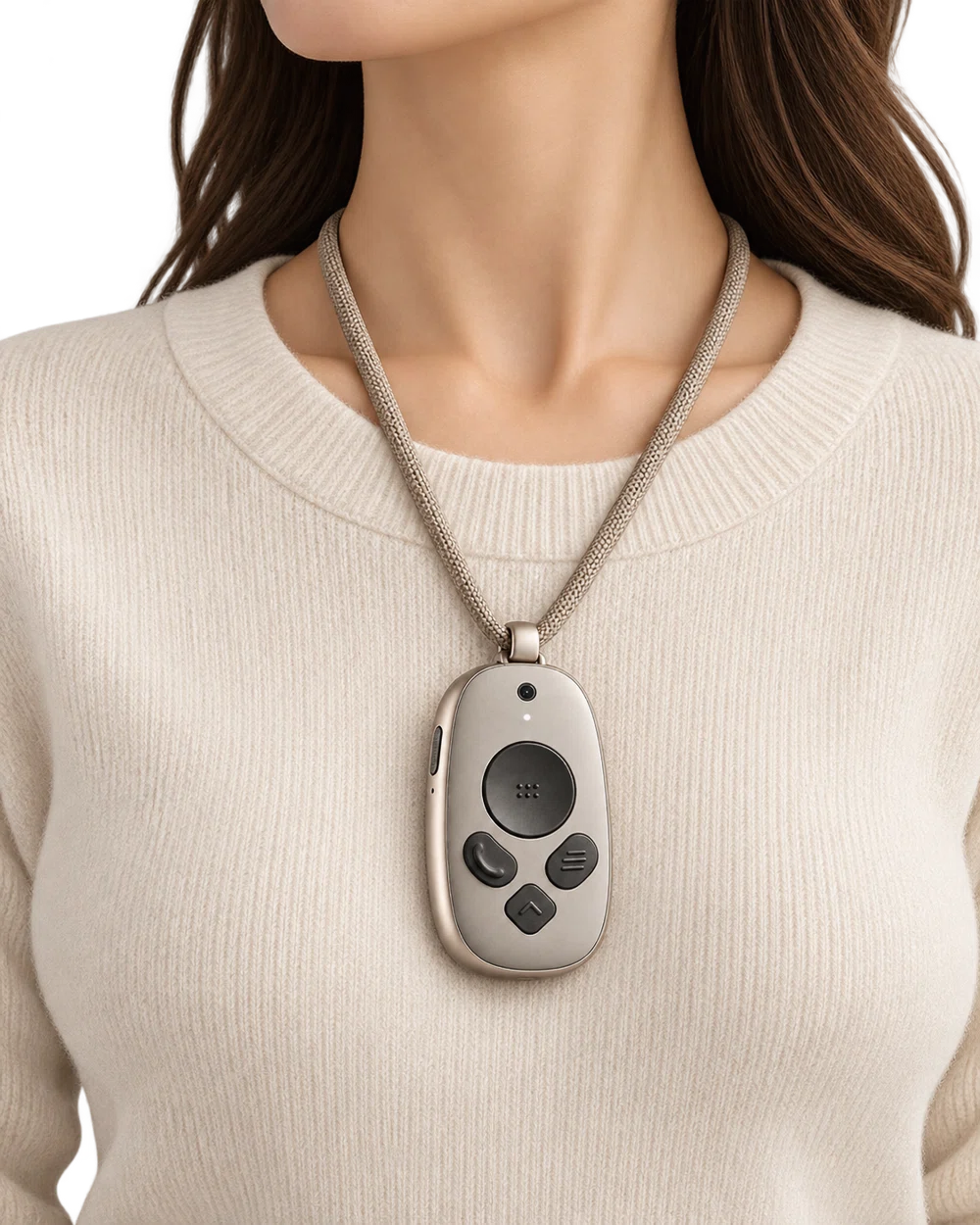
02 — ALWAYS WITH YOU
ONE is designed to sit naturally at the chest, keeping the controls within reach and leaving both hands free.
03 — COMFORT IN MOTION
The neck cord is intended to stretch gently and return to its original length—soft on skin, secure in normal use, and paired with a breakaway release for snag safety.
Soft braided polyester
Latex-free elastane / spandex
30–50% stretch and shape recovery
Neck-wear breakaway clasp
Material choice, stretch range, skin comfort, and clasp release force remain targets to be physically tested. Stretch alone is not a substitute for a breakaway clasp.
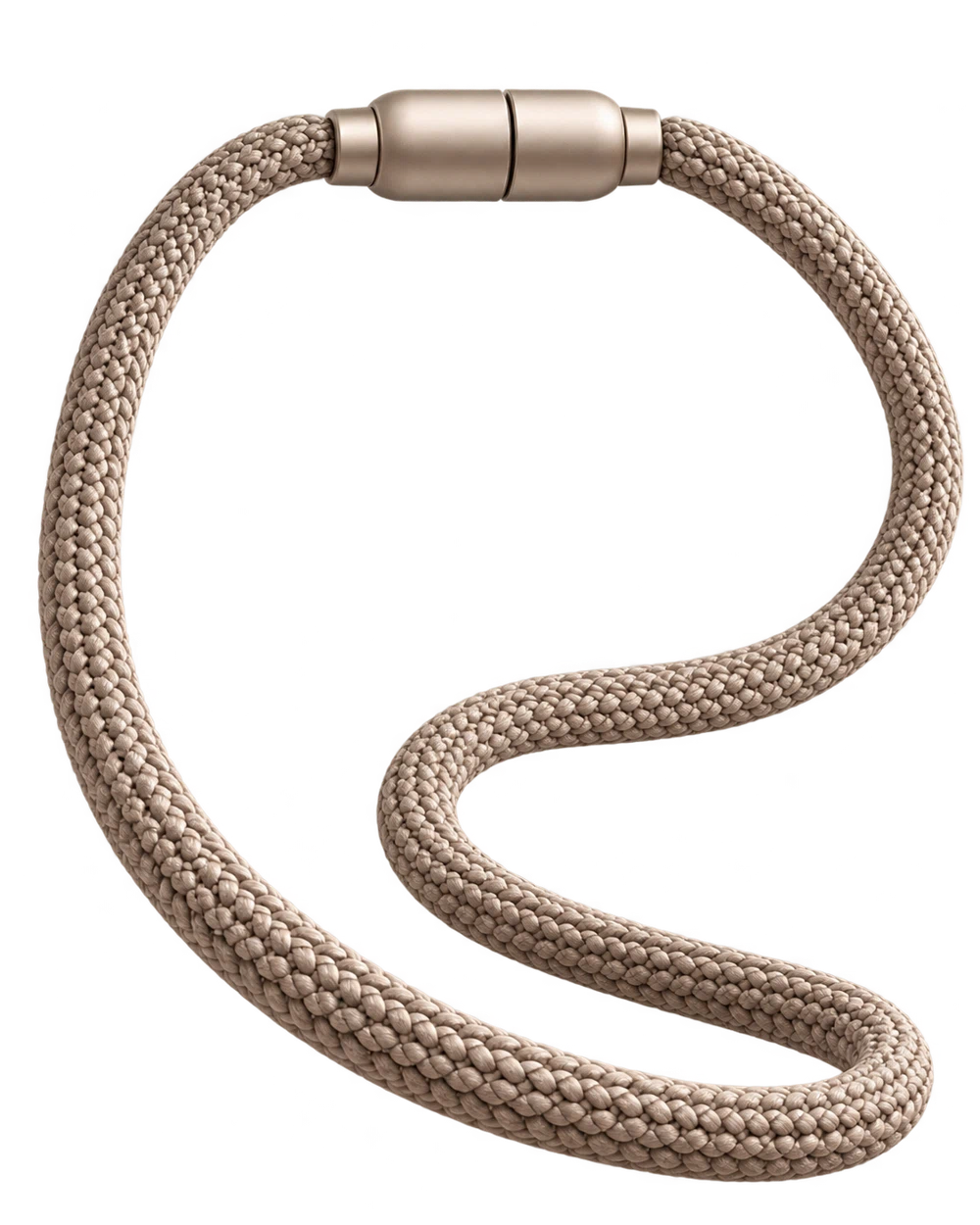
Concept visualization, not a measured material test.
04 — THE EXPERIENCE
Everyday capabilities, brought together in one natural interface. These are intended features of the proposed product—not functions demonstrated in a finished device.
Talk to the people who matter, without searching through a screen.
Letters, packaging, or a menu. Ask ONE to read what the camera can see.
Get descriptions of familiar objects, scenes, and everyday surroundings.
Hear location information and map directions, supported by your phone.
Reminders, schedules, and simple tasks—handled through conversation.
Deliberate camera and microphone access, with controls you can feel.
AN INTERACTION, IMAGINED
Select a scenario to see how a brief, voice-first exchange could work.
“Hold the letter in front of the camera. I can help you line it up.”
Illustrative dialogue · Not a live AI demo
05 — THE THINKING INSIDE
Our proposed first version pairs a simple wearable with an Android companion app. The phone provides connectivity and processing while ONE provides an easier way to interact.
Architecture is proposed and not yet validated in an integrated prototype.
06 — FROM IDEA TO REALITY
We believe meaningful accessibility products are built with the people who use them, not just for them.
Co-design with blind and low-vision users. Test tactile interactions and comfort.
Develop accessible Android software and a functional wearable prototype.
Pilot in everyday settings. Validate safety, reliability, and usefulness.
Refine industrial design, test compliance, and prepare for manufacturing.
THE NEXT CHAPTER
ONE is at the beginning. We're shaping the vision, documenting the engineering questions, and preparing to build it responsibly.